The Romitorio tells a story that stretches across millennia: from the Etruscans and Romans, to medieval Christian hermits, and even to its reuse in more recent times.
The layering of different traces, and even pagan traces, makes the Romitorio di Pienza a unique testimony to the continuity and transformation of spiritual life over the centuries — a place where faith, history, and human experience converge.
The Milking Mary
The Milking Mary
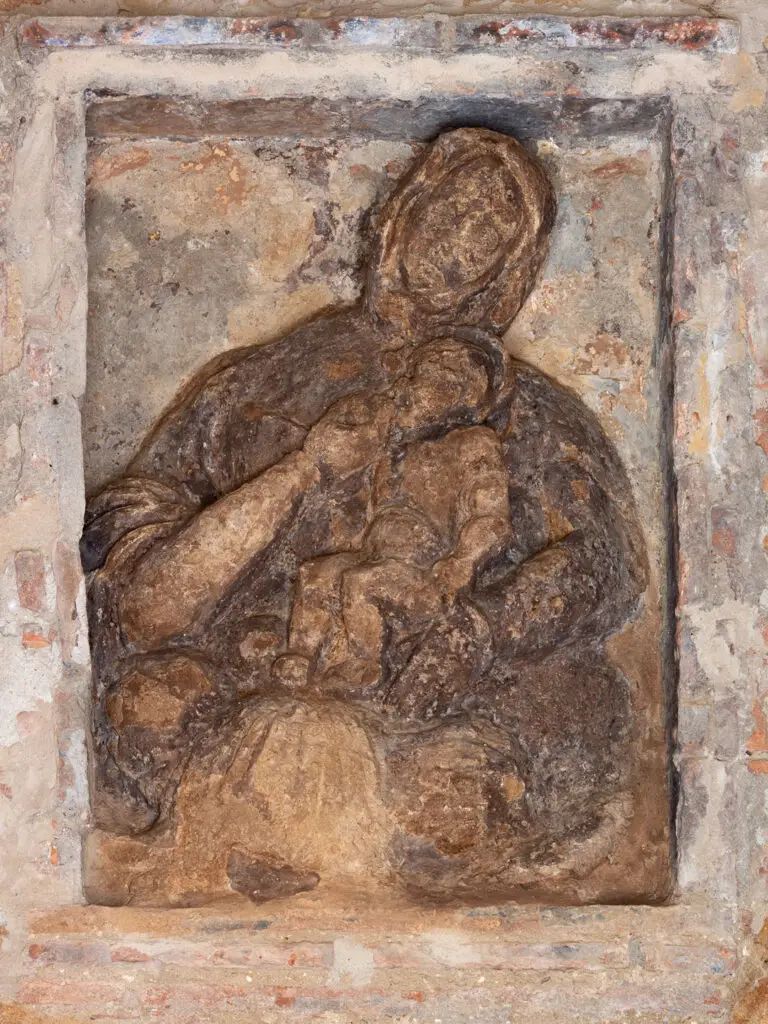
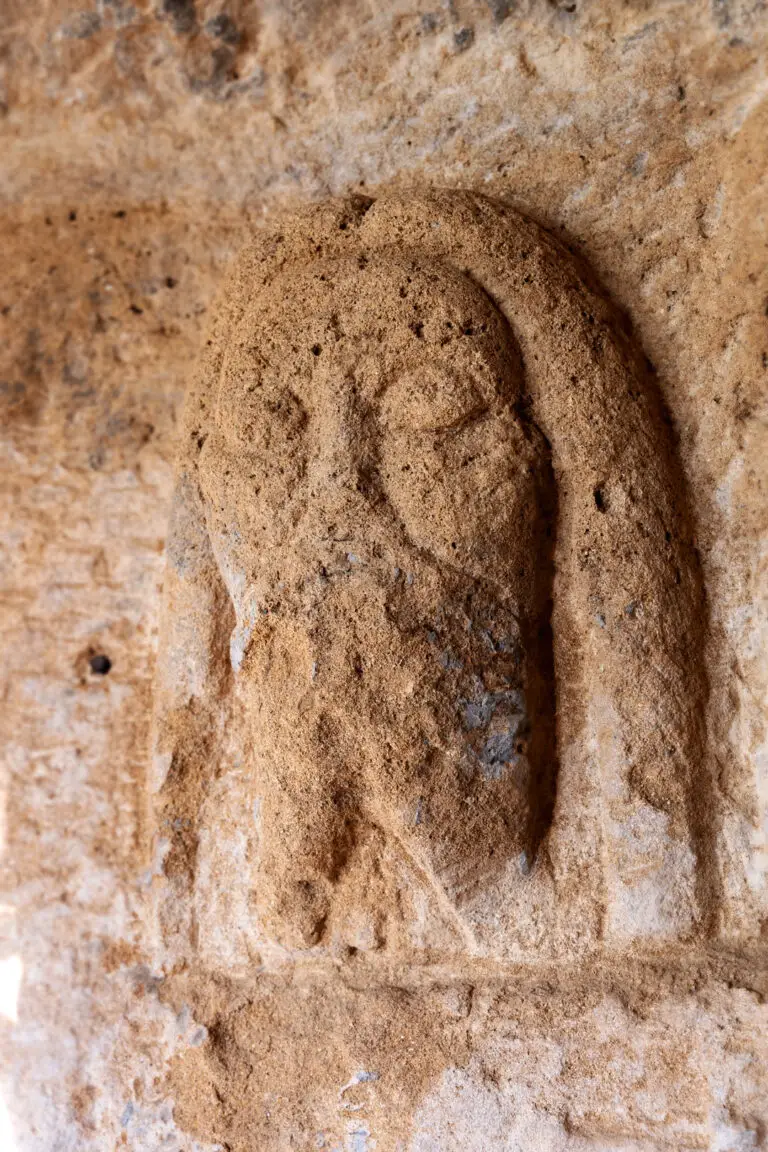
One of the most extraordinary features of the Romitorio is the 14th-century statue of the Madonna del Latte, carved directly into the sandstone. It depicts the Virgin Mary nursing the infant Jesus and was once covered with plaster and color. Beyond its religious significance, it served as a powerful symbol of fertility. For generations, women would come to the statue to pray for the ability to produce breast milk, linking faith and everyday life in a profoundly intimate way.
The Entrance of the Hermitage
The Entrance of the Hermitage
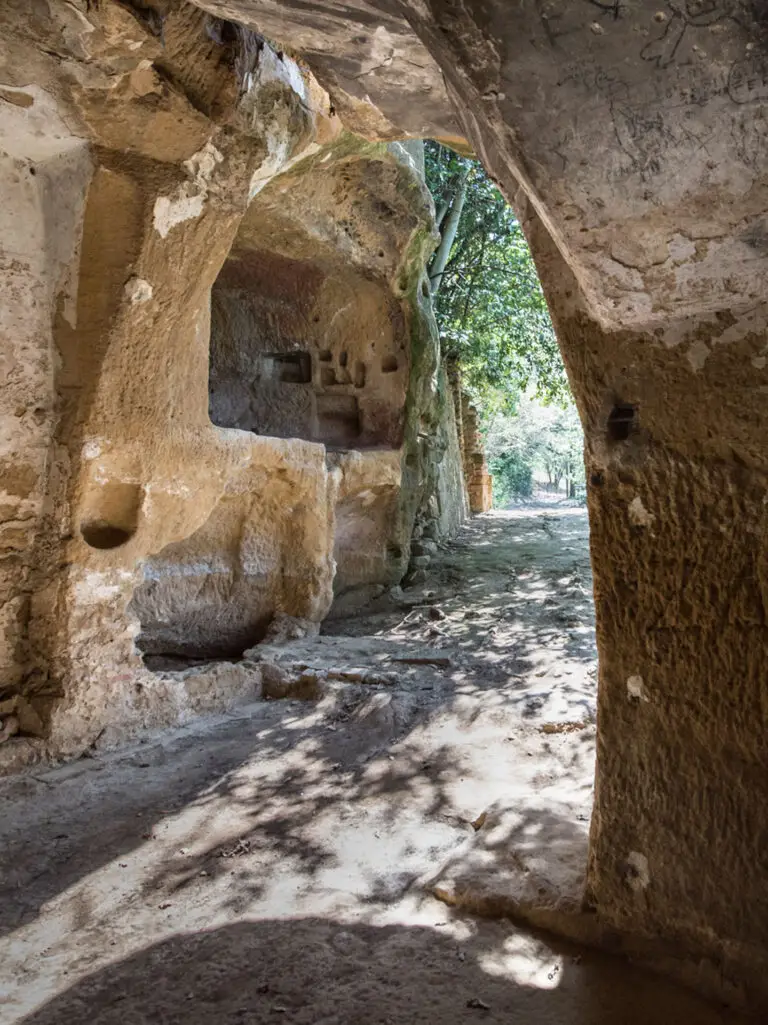
Just before entering the first room, visitors encounter three striking hollows carved into the sandstone. These began as Etruscan tombs, but over time were given new purposes: two became cisterns for collecting water, while one was transformed into a Christian tomb. Above the tomb, figures are sculpted directly into the rock, silent witnesses to centuries of devotion. Nearby, a small cavity once offered the hermits a simple resting place. These layers of reuse reveal how each generation left its mark, adapting the ancient spaces to their lives and beliefs.
The Main Chapel
The Main Chapel
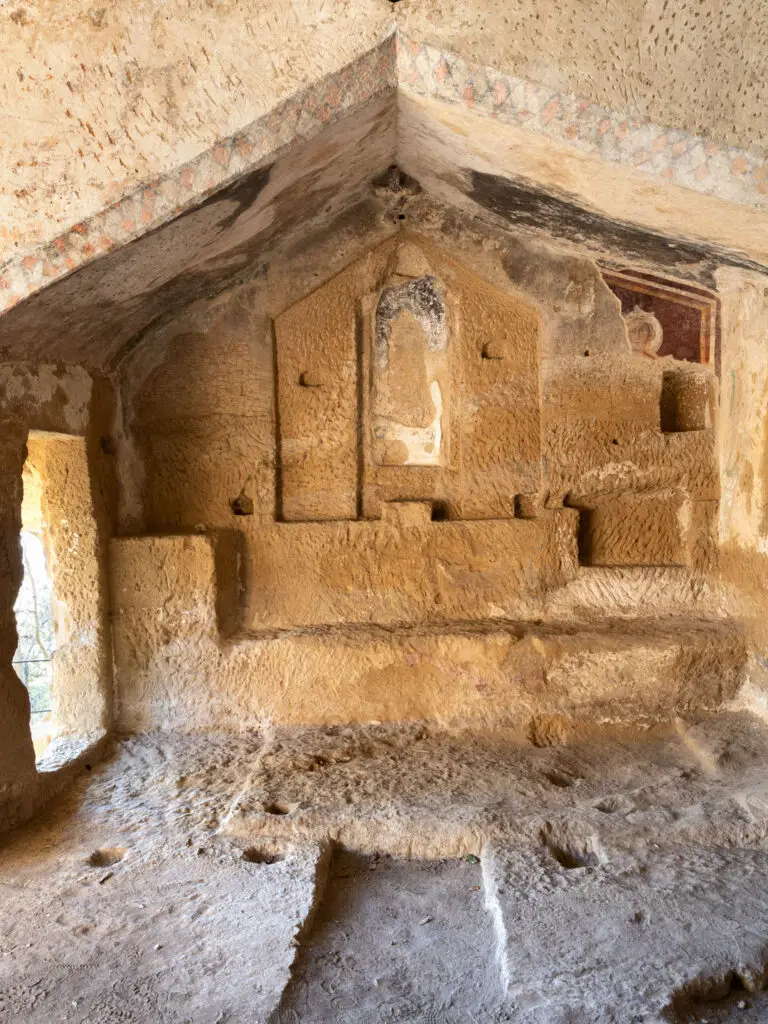
The first room of the hermitage is a small chapel carved entirely into the sandstone. Traces of frescoes still cling to the walls, some of which have been partially restored. At its center lies the shape of a tomb dated to 1344, whose original tombstone is preserved today in the Museo Diocesano of Pienza.
The Statue Room
The Statue Room
Further inside lies a chamber completely carved by hand out of solid sandstone. Known as the “Statue Room,” it contains a remarkable series of sculptures:
Seven human-sized, partially-destroyed statues depicting the Passion of Christ.
A figure of a monk with open arms.
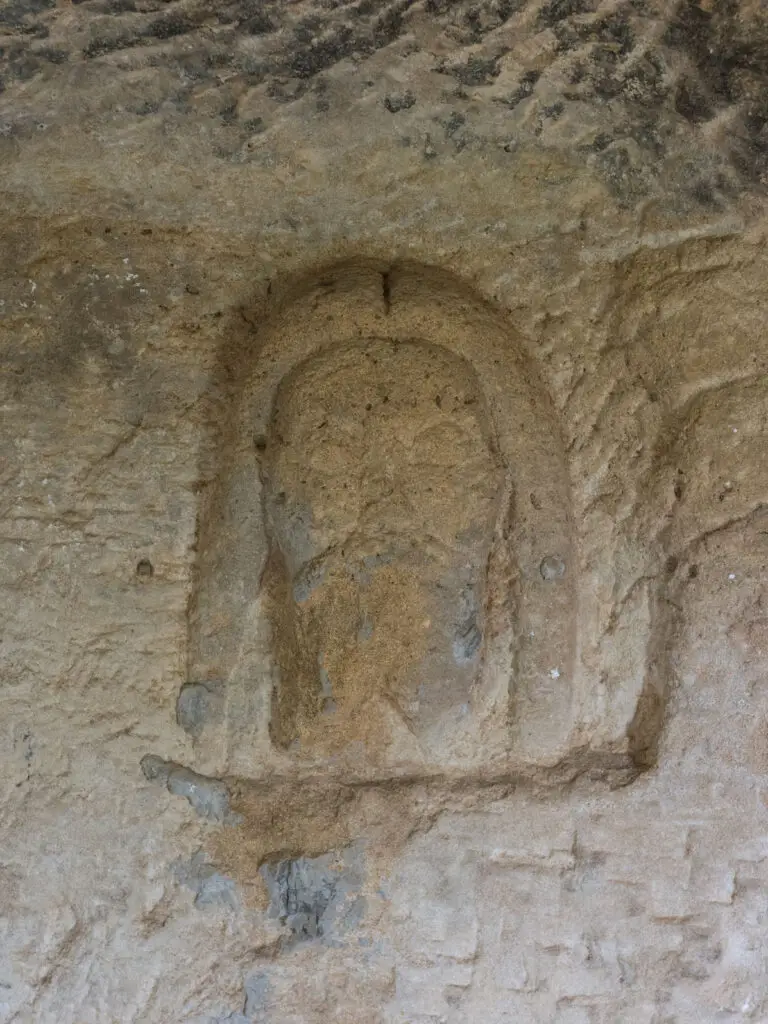
A striking representation of Christ’s face, whose features bear a remarkable resemblance to the Shroud of Turin.
The Mermaid
The Mermaid
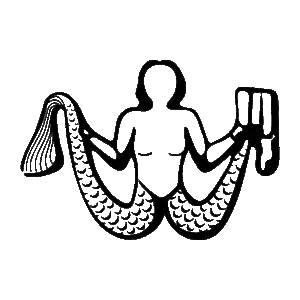
Among the most surprising discoveries is a mermaid figure, one of only three ever found in Pienza. Dating back to the 8th century A.D., it is a remnant of pagan symbolism and, like the Madonna del Latte, was associated with fertility.
We use cookies to ensure that we give you the best experience on our website. If you continue to use this site we will assume that you are happy with it.